
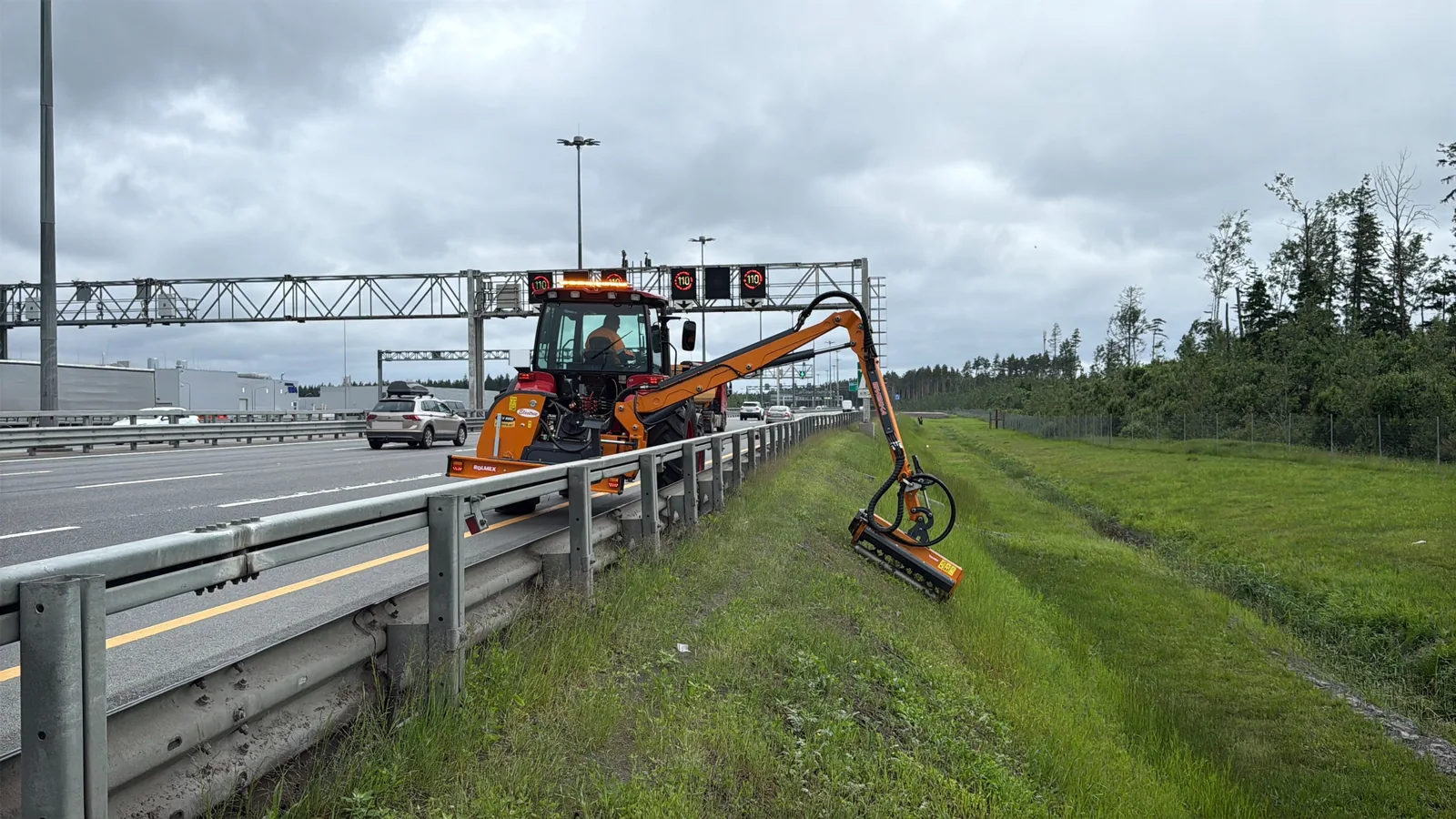
Drivers mostly pay attention to the condition of the road surface, the signage and the volume of traffic. Yet road safety also depends on elements located outside the carriageway. Verges, ditches and embankments are responsible for proper drainage, the stability of the road edge and the visibility of signs. When vegetation in these areas grows too tall or maintenance is carried out irregularly, the risk of a restricted field of view, standing water and damage to the infrastructure increases.
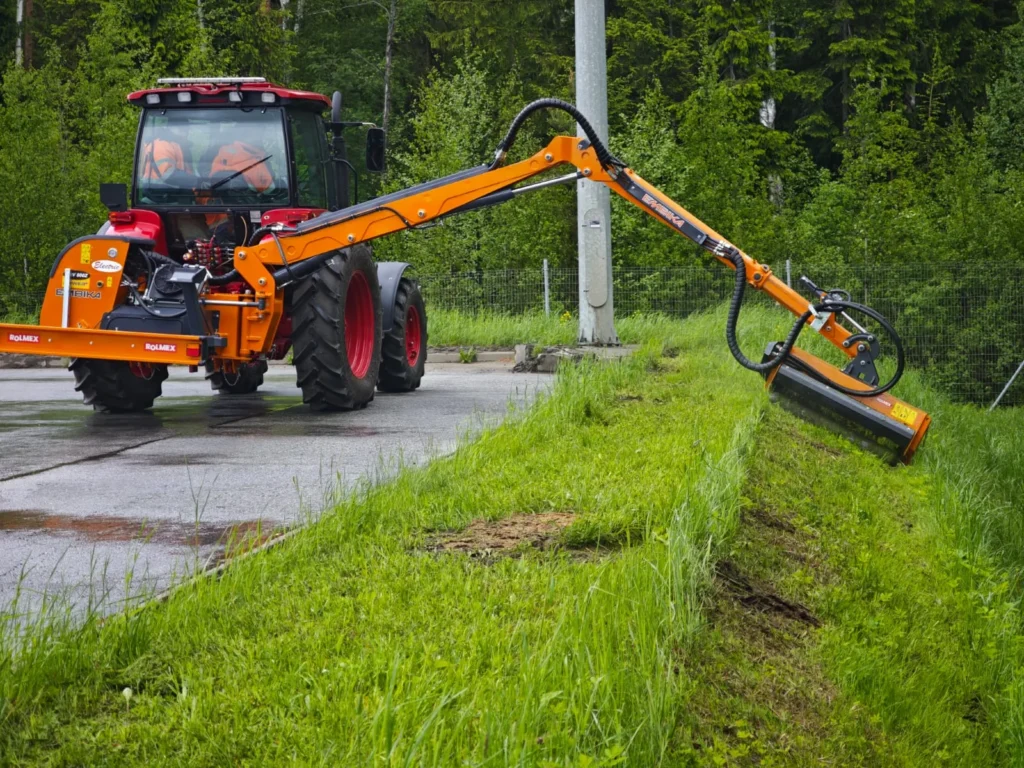
Why does the condition of verges and embankments matter for road safety?
Verges and embankments perform several functions at once. They allow a vehicle to stop in an emergency, support the run-off of rainwater and stabilise the road structure. Their condition also affects how clearly the route can be read, particularly outside built-up areas and on sections with limited visibility.
Grass that is too tall on verges and embankments hides road signs, delineator posts and crash barriers. The problem is worst at junctions, roundabouts and bends, where the driver needs to assess the situation quickly. In addition, vegetation overgrowing ditches and culverts restricts the run-off of water after heavy rain — moisture lingers at the edge of the road surface, accelerating the deterioration of the asphalt.
What hazards result from neglected mowing of roadside areas?
A lack of regular mowing has a direct effect on traffic conditions. Neglected roadside areas cause:
- reduced visibility of signs and safety devices,
- hindered access to drainage ditches,
- masking of verge damage and unevenness,
- the risk of soft ground giving way when a vehicle leaves the carriageway,
- hindered work for technical and emergency services.
Why does verge mowing require a specialist approach?
Mowing roadside areas differs from standard green maintenance. The work is carried out in the immediate vicinity of traffic, often on steeply sloping ground or with restricted access.
Working in the immediate vicinity of road traffic
Verge maintenance is usually carried out while traffic keeps flowing. Operators work a few metres from passing lorries and buses. An important safety feature here is the bi-directional rotation of the cutting shaft — the head can mow so that the shredded material is thrown towards the embankment rather than towards the carriageway and passing vehicles. This solution is fitted as standard in our GH120 flail heads.
Limited access for standard equipment
Embankments, ditches and verges along safety barriers are difficult to handle with conventional mowers. Sloping ground and unstable footing increase the risk of damage to the equipment. This is why boom mowers are used — and on wide road corridors and deep ditches the KRV series long-reach arms are particularly effective, reaching beyond the crash barrier without stopping traffic along the whole section. On embankments, the head’s support roller also plays an important role, guiding the head over uneven ground and protecting the turf from scalping.
How does regular green maintenance affect the durability of road infrastructure?
Regular mowing limits soil erosion and improves the performance of drainage systems. Water leaves the road corridor faster and the verges remain stable. Inspection chambers, culverts and drainage elements stay visible, which makes technical inspection easier. In practice, systematic green maintenance reduces repair costs and extends the service life of the road surface. Rolmex machines are used in road maintenance by, among others, regional (voivodeship) roads authorities — you will find examples of deployments in our references.
Mowing verges and embankments — what is worth knowing?
- Verges and embankments are responsible for drainage, road stability and the visibility of infrastructure.
- Neglected mowing leads to a restricted field of view and accelerated deterioration of the road surface.
- Roadside work requires boom mowers and appropriate traffic management.
- Regular maintenance of roadside areas extends the service life of the infrastructure.
Looking for proven equipment for verge and embankment maintenance? Discover Rolmex boom mowers or contact us — we will advise on a configuration for specific road sections.
FAQ
Can overgrown verges affect driving safety?
Yes. They hide signs, delineator posts and barriers and make it harder to judge the line of the carriageway edge — especially after dark and in rain.
Why is it important to keep roadside ditches clear?
Ditches drain water away from the road corridor. An overgrown ditch holds water at the edge of the road surface, which accelerates the formation of potholes in the asphalt.
What equipment is used for mowing embankments?
Most often boom mowers with a flail head. For deep ditches and wide road corridors, long-reach arms (e.g. the KRV series) are used, which allow mowing beyond the barrier without driving onto the embankment.