
The same flail head can mow the lawn outside a town hall almost as evenly as a cylinder mower — or shred tree regrowth several centimetres thick on the verge of a main road. What actually determines which of these machines you get is not the body, but what spins inside: the rotor shaft and the blades or hammers mounted on it. You can think of it as four levels of mowing — from the gentlest to the heaviest — to choose according to your needs. In this post we present every blade option available for our GH120 mowing head — from the precision shackle-mounted Precision ROTOR shaft to the H360 FORESTAL swinging hammers for the heaviest scrub.
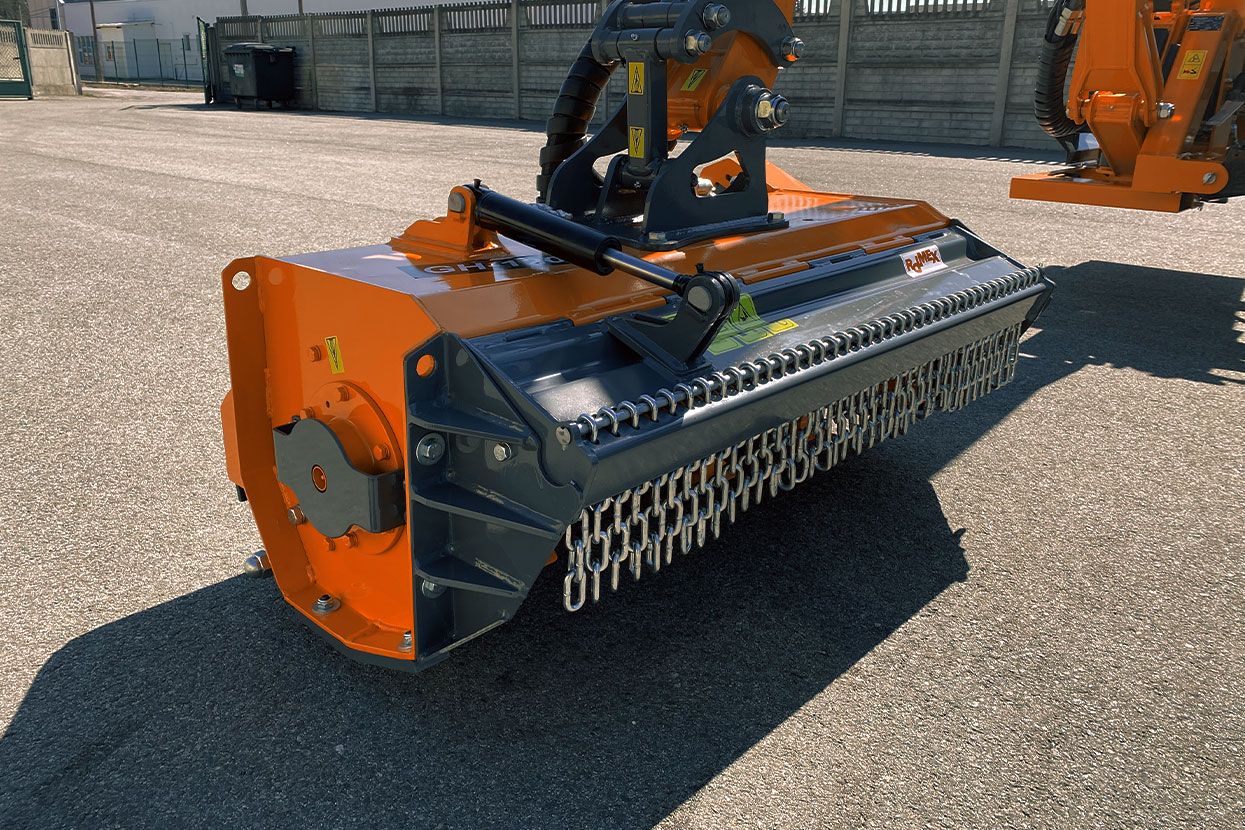
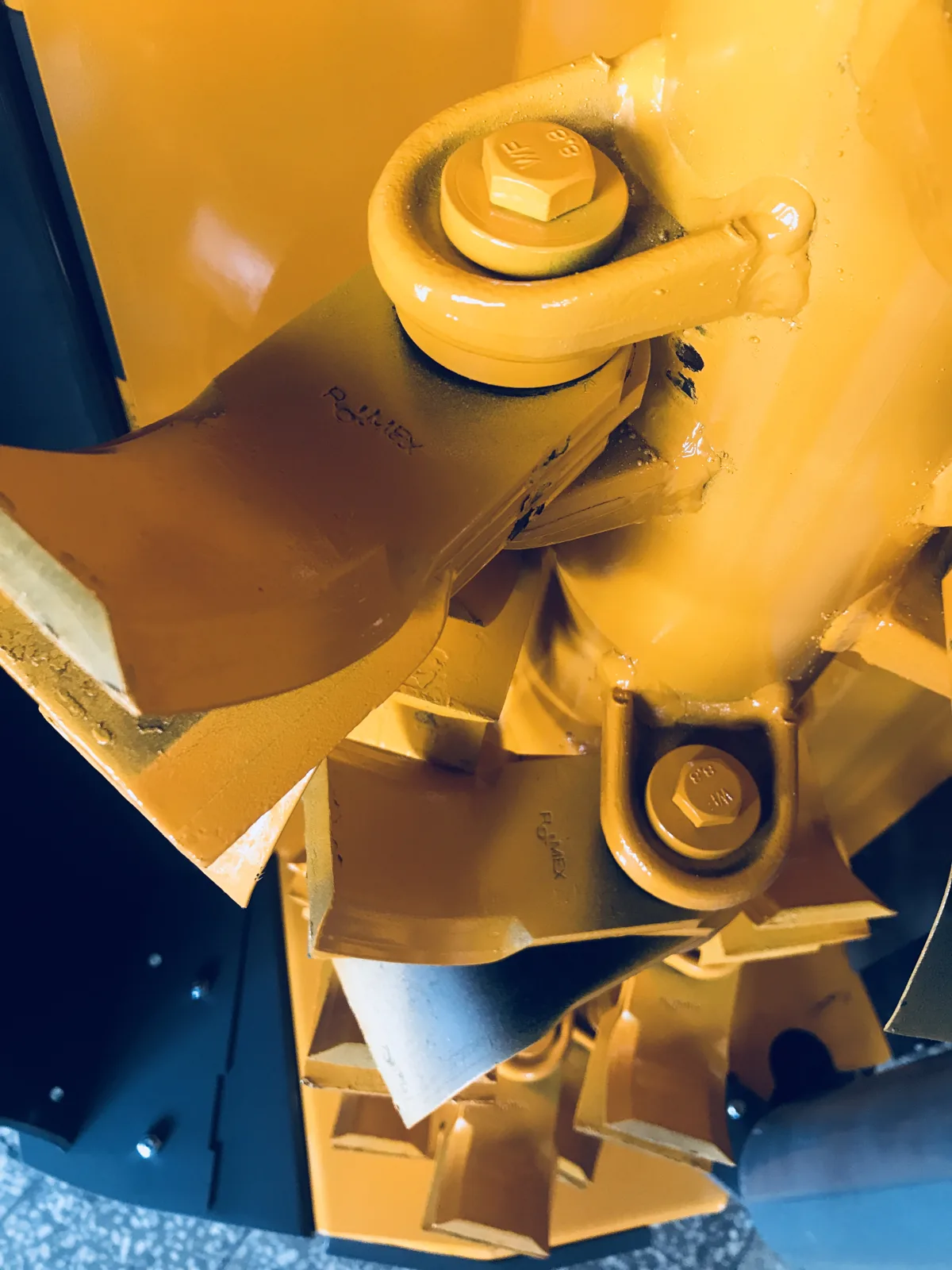
Level 1: Precision ROTOR — shackle-mounted shaft with Y-blade and centre blade, mowing “like at Wembley”
For a neat, precise cut we recommend the Precision ROTOR — a precision shackle-mounted shaft on which a Y-type blade works together with a centre blade — three cutting edges in each cutting set in total. This triple arrangement cuts grass cleanly and evenly, without tearing and without the characteristic “fraying” of the stems that ordinary flails leave behind. The result? A turf like Wembley. This solution has been used for years in France and Italy, where the visual standards of roadside green maintenance are the highest in Europe.
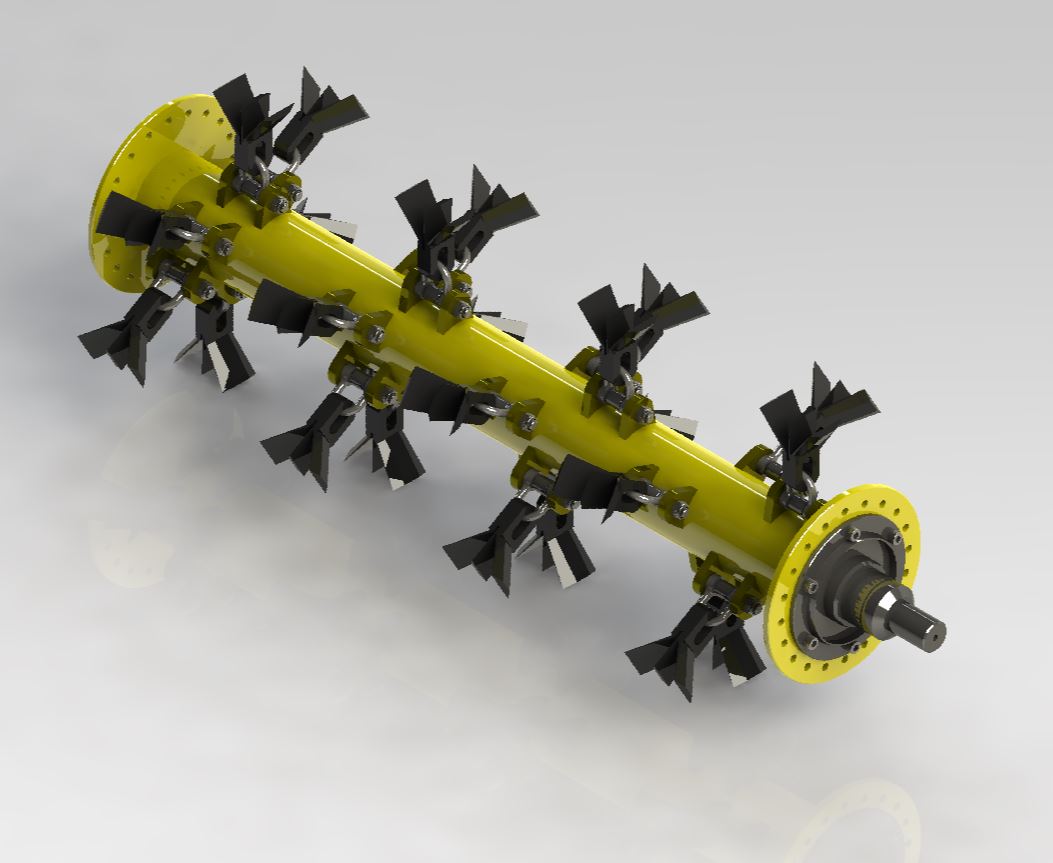
The shackle also has an additional advantage: when it hits a stone or an obstacle, the blade swings away instead of breaking.
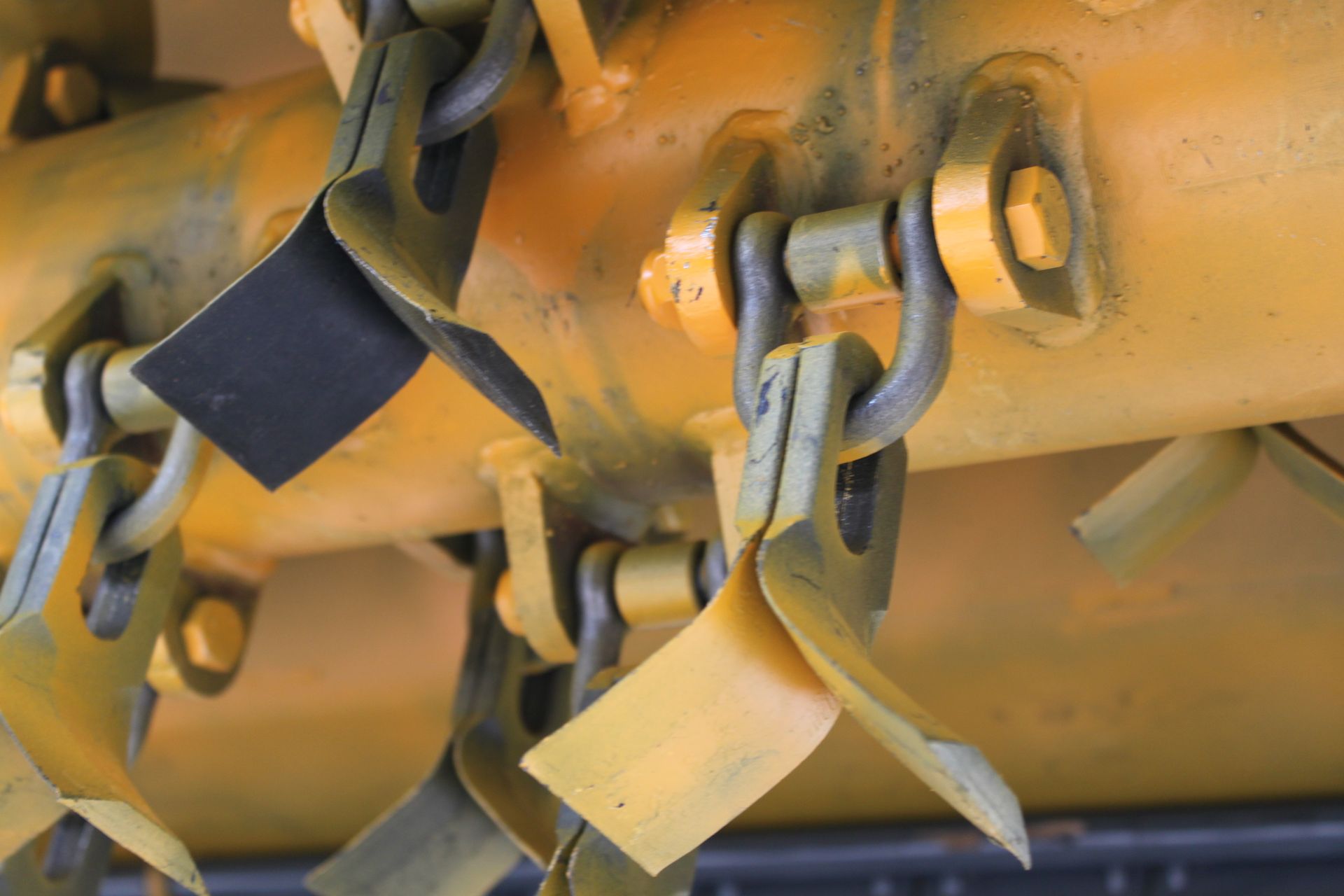
Interestingly — if you take a close look at French boom mowers, which can cost three times the price of our machine, you will find exactly the same solution there. When you pay for a Rolmex mower, you get the very same precision-cutting technology that the most expensive Western European manufacturers advertise.
When to choose it: representative grounds, urban green spaces, lawns, regular (frequent) verge mowing — wherever the finish is expected to look like the work of a garden mower.
Level 2: universal shaft with Y and YI blades — the golden mean for ditches and verges
The second option is the universal shaft with Y-type blades and their heavier version, the YI. This is the most popular configuration in everyday road and municipal work: cutting precision is lower than with the shackle-mounted shaft, but in return the head copes with vegetation that an ordinary mowing blade would not get through — Y/YI blades cut twigs and regrowth up to 5 cm of dry wood, and at the same time they handle ordinary grass mowing extremely well.
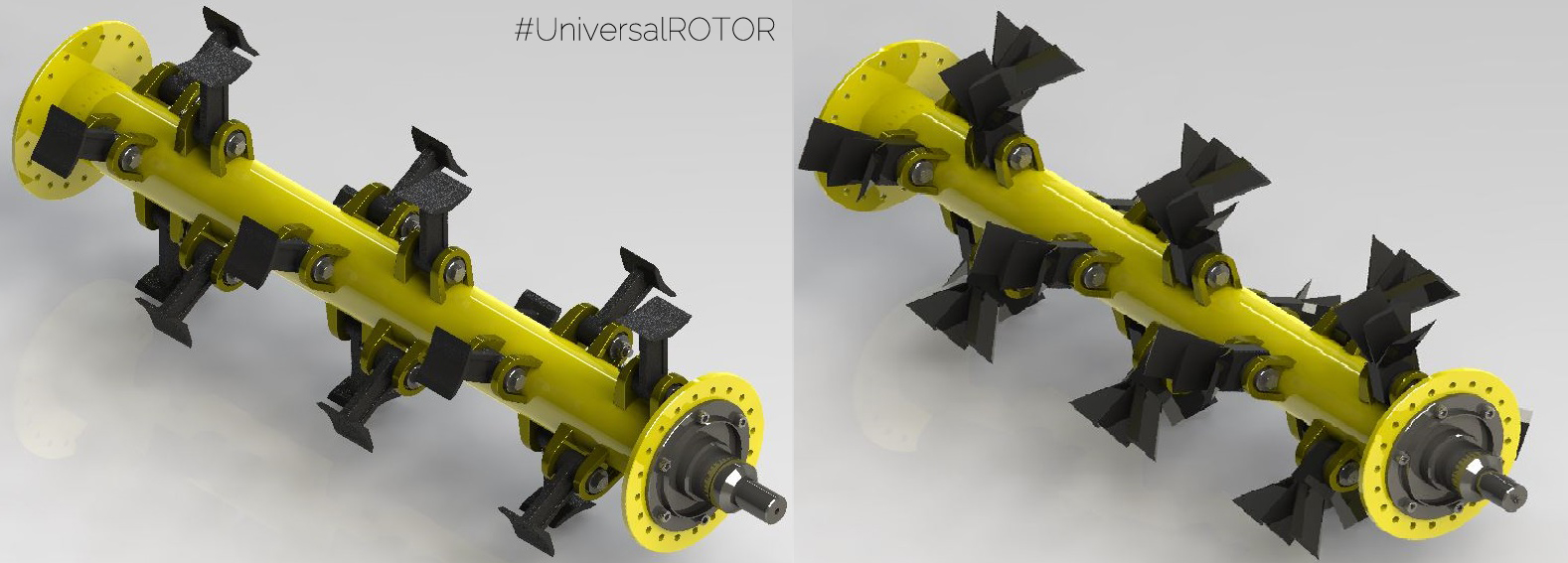
Replacing a single blade takes a moment and requires no specialist tools — and that opens the way to level three.
When to choose it: mowing ditches, embankments and verges once or twice a season, mixed terrain (grass + self-seeded saplings), typical contracts for road authorities.
Level 3: the T6 hammer — the English standard on the same shaft
Level 2 and level 3 are fully interchangeable — it is the same universal shaft, on which the Y/YI blades can at any time be swapped for T6-type hammers — exactly the type of flail that comes as standard on English boom mowers, machines valued (and priced) like few others in the industry. The T6 hammer is more massive than the YI blade and shreds woody regrowth up to 6 cm of dry wood — it breaks up dense scrub and brambles with more authority, while keeping the smooth running of the universal shaft.
When to choose it: neglected verges and plots, dense bushes, work “on the borderline” between mowing and mulching — without buying a second shaft; a set of hammers is enough.
Level 4: H360 FORESTAL swinging hammers — the heaviest artillery in the GH120
Finally, the configuration for the toughest conditions: the classic shaft with H360 FORESTAL swinging hammers. Armed this way, the GH120 head comfortably shreds regrowth up to 10 cm in diameter (up to 11 cm at most), entering a range of work that with many manufacturers already calls for a separate forestry mulcher. The special rotor geometry and the carefully matched hammer mass mean that despite the heavy workload the head keeps vibration low and durability high.

To be entirely honest, though: the quality of plain grass mowing is at its weakest on this level. The swath left by swinging hammers is frayed and ragged — there is no evenly mown turf effect here. This is a shaft for shredding wood, not for lawn aesthetics; for a neat finish, levels 1 and 2 are the ones to use.
When to choose it: clearing years of neglected growth, firebreaks, power lines, land preparation — wherever “mowing” in practice means shredding wood.
Comparison of blades for the GH120 head
| Level | Shaft configuration | Mowing precision | Max. cutting diameter | Typical use |
|---|---|---|---|---|
| 1 | Precision ROTOR — shackle-mounted shaft, Y-blade + centre blade | highest — the “Wembley” finish | grass, thin shoots | urban green spaces, representative grounds |
| 2 | Universal shaft — Y / YI blades | medium, very good grass mowing | up to 5 cm of dry wood | ditches, embankments, verges |
| 3 | Universal shaft — T6 hammers (interchangeable with level 2) | medium | up to 6 cm of dry wood | bushes, brambles, neglected areas |
| 4 | H360 FORESTAL swinging hammers | lowest — frayed swath, a shaft for shredding | up to 10–11 cm | heavy clearing, mulching work |
How to choose? One body, many machines
Whichever shaft you choose, every GH head runs at 3,000–3,100 rpm, offers two-way rotation of the cutting shaft (mowing “against the grain” or with the discharge thrown away from the operator), an inner liner made of HARDOX 400 steel plate, a belt drive with SKF toothed belts and a support roller with concealed lubrication. The head is available in widths from 100 to 130 cm — 120 cm being the standard, hence the GH120 designation.
In practice, many of our customers buy the head with the universal shaft and, after a season, order a second shaft or a set of hammers for specific contracts. That is far cheaper than a second machine — and the changeover turns the head from a “grass mower” into a heavy clearing tool. If you are still planning your purchase, a good place to start is our post on what boom mowers are.
Frequently asked questions
Can I change the blade type on a GH120 head I have already bought?
Yes. Y/YI blades and T6 hammers are interchangeable on the same universal shaft (levels 2 and 3), and the Precision ROTOR (shackle-mounted shaft with a Y-blade and centre blade) or the shaft with H360 FORESTAL swinging hammers can be purchased later, so you can refit the head in your own workshop.
Which blades are best for mowing road verges?
For regular mowing — the Precision ROTOR, i.e. the shackle-mounted shaft with a Y-blade and centre blade (the neatest finish). For one or two cuts a season, when self-seeded saplings have already appeared in the grass — YI blades or T6 hammers.
How does a head with swinging hammers differ from a forestry mulcher?
The boundary lies in the diameter of the wood being shredded and in the rotor design — the GH120 with H360 FORESTAL hammers ends where a carbide-tooth mulcher begins. We covered this in detail in a separate comparison post.
Questions about choosing the right blades for your terrain? Contact us — we will advise you on the right configuration for your specific contract and terrain.