
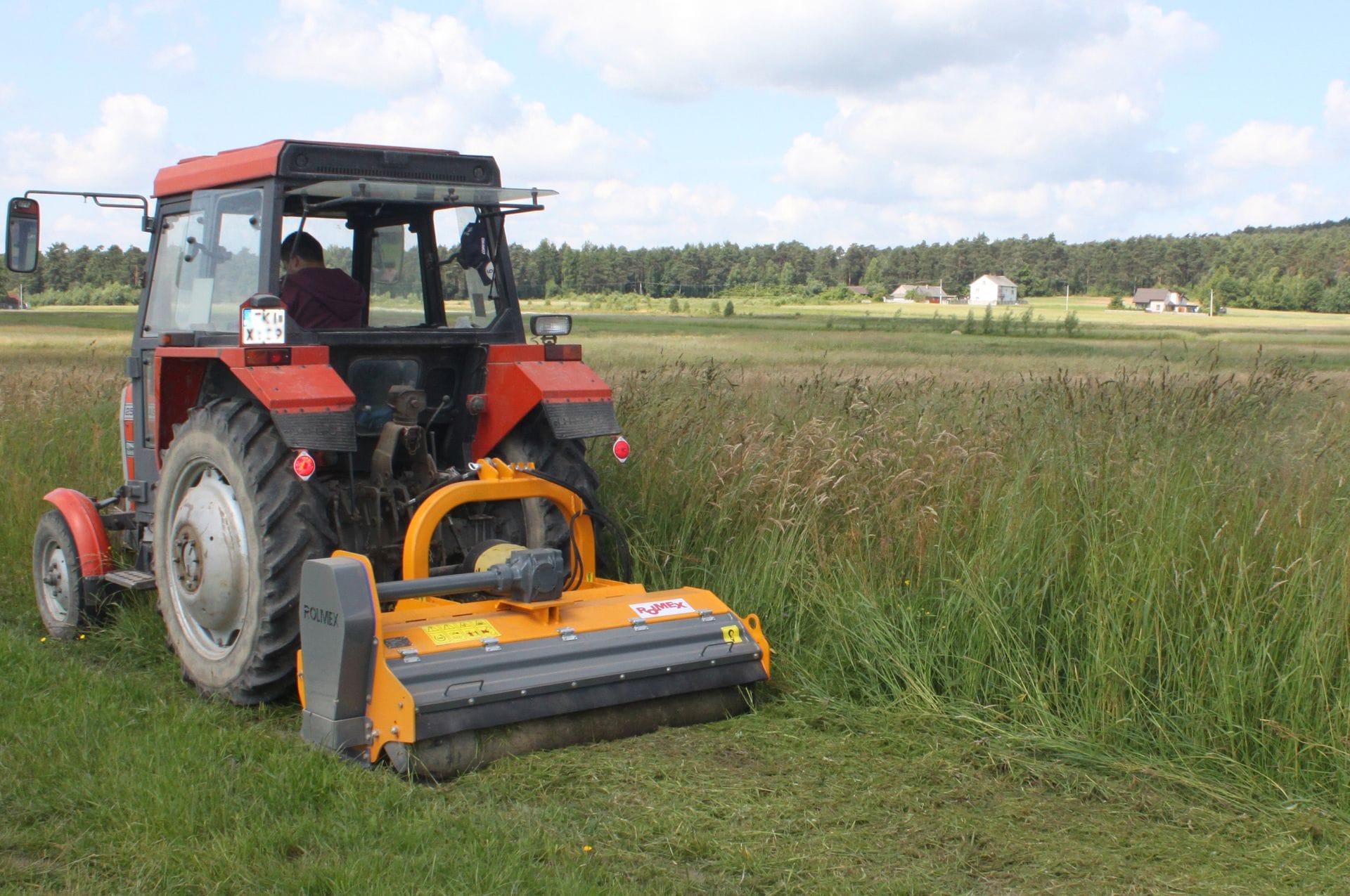
Owners of fallow farmland often put off tidying up the land until the vegetation starts to hinder access to the plot or generate additional costs. Yet regular mowing makes it possible to curb the spread of weeds much earlier, reduce the fire risk and prepare the land for further use. Well-planned clearance work also helps maintain the value of the plot.
What is fallow farmland and why does it need clearance work?
Fallow farmland is land not used for crops or livestock. Left unattended, the area quickly becomes overgrown: first with grasses and weeds, later with shrubs and self-seeded trees. After a few seasons, access to the plot can be difficult even for heavier equipment — which is why it is best to start clearance work early.
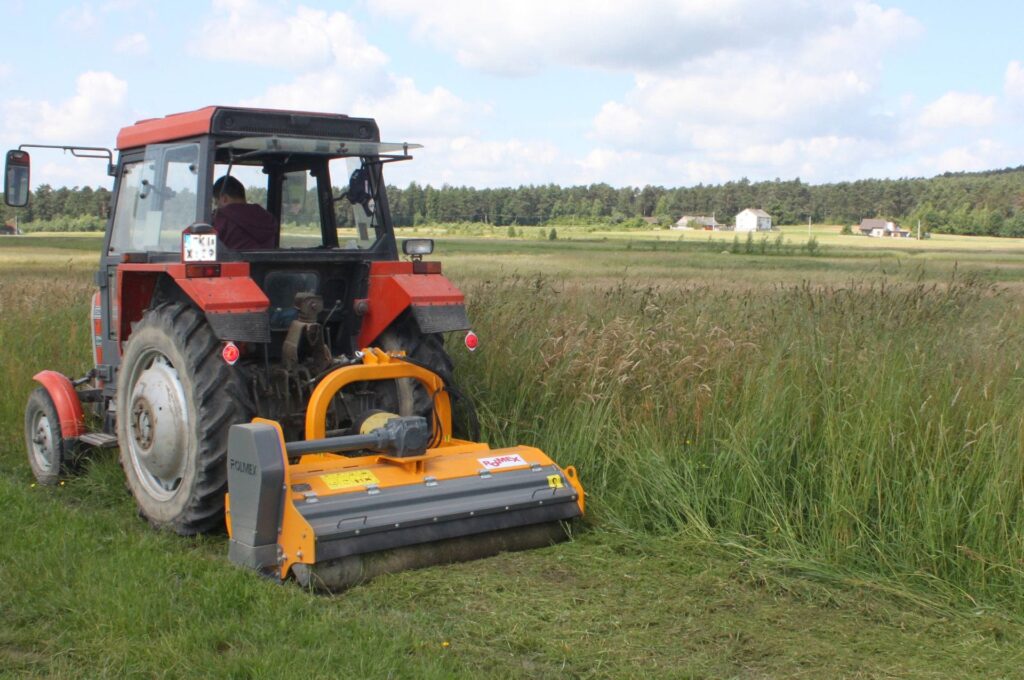
On larger areas, the choice of machinery is key. Flail mowers — for example the heavy-duty KB series on a pantograph linkage — cope with tall vegetation, thicker stems and uneven ground, shredding the growth in a single pass with no need to remove the biomass by hand.
Consequences of long-term neglect
No mowing means weeds spreading to neighbouring plots, a higher risk of fire in dried-out vegetation in summer, the spread of invasive species and gradual degradation of the soil structure. The land then becomes harder to sell, lease or develop.
When does mowing become an essential part of land management?
Mowing is necessary when vegetation starts to limit control over the plot — especially on heavily weed-infested land, along access roads and on plots bordering forests or buildings. Mowing is carried out from spring to autumn; on some plots 2 cuts a year are enough, while others require several passes per season.
It is worth knowing that farmers can obtain funding for brush and tree clearing on agricultural land — we wrote about this in our post on the ARiMR call for brush-clearing machinery (ARiMR is the Polish Agency for Restructuring and Modernisation of Agriculture).
What are the benefits of clearing fallow land?
Regular clearance improves safety, limits weeds and reduces the amount of dry biomass. Cleared land is easier to allocate to agricultural production, grazing, leasing, investment or energy crops. Often, simply mowing the plot noticeably increases its market appeal.
Why does managing fallow land require a well-thought-out strategy?
The work plan should take into account the degree of weed infestation, the lie of the land, soil moisture, the presence of self-seeded saplings and the intended use of the plot. A single mowing rarely solves the problem of land neglected for years.
Matching the method to the type of land
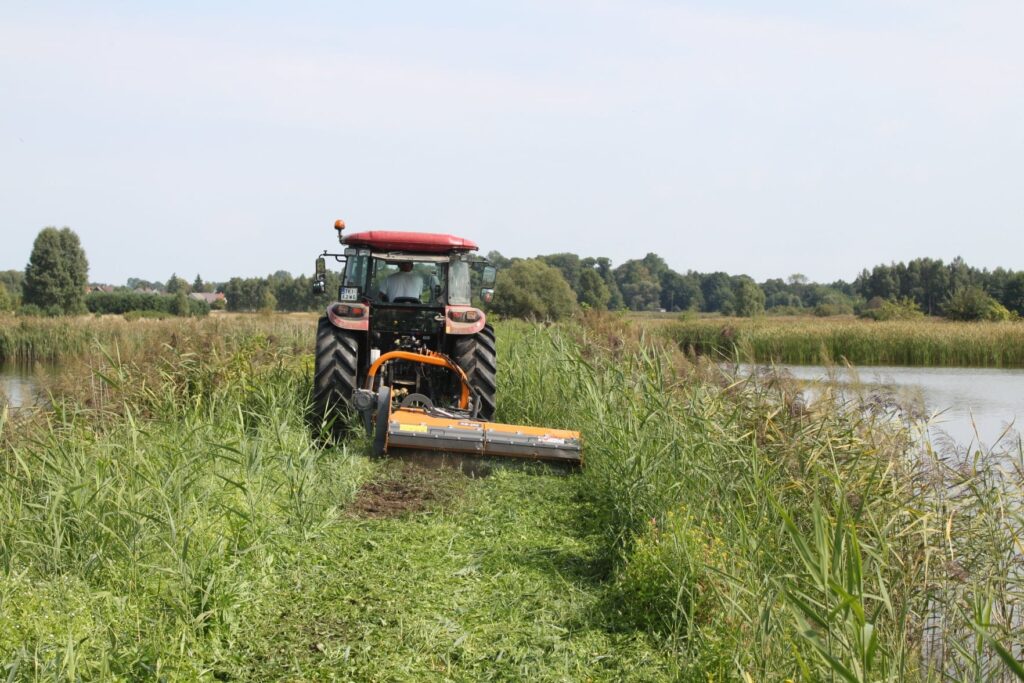
A practical rule for choosing equipment by the thickness of the growth: grasses and weeds — a flail mower; self-seeded saplings up to approx. 10 cm — a head with H360 FORESTAL rotating hammers; thicker trees and long-established scrub — a GKC forestry mulcher with tungsten carbide teeth. We described the dividing line between a flail mower and a mulcher in detail in the post what is the difference between a flail mower and a forestry mulcher.
Fallow farmland and the use of flail mowers
- Regular mowing limits the overgrowth of fallow land and makes the plot easier to control.
- Neglected plots lose their usable value and require greater outlay.
- Flail mowers are effective on tall, dense vegetation; for self-seeded saplings, rotating hammers or a mulcher take over.
- Effective management requires matching the method to the land and its intended use.
Want to clear fallow land and prepare it for further use? See Rolmex flail mowers or write to us — we will match the equipment to the type of growth.
FAQ
Is mowing fallow farmland compulsory?
In many municipalities, landowners are obliged to control weeds and mow regularly during the growing season.
How often should fallow land be mown?
Usually from 2 to several cuts a year, depending on the growth rate of the vegetation and the intended use of the land.
Why are flail mowers recommended for fallow land?
They cope with tall grass, weeds and small self-seeded saplings, and shred the vegetation at the same time — there is no cut material left to collect. For thicker regrowth (over approx. 10 cm), a forestry mulcher is used.